
share

How to promote a multivendor marketplace: A Two-Sided Growth Playbook

How to promote a multivendor marketplace - feature image

With the potential for success a possibility, many businesses are planning to launch their own ecommerce marketplaces rather than simply listing their products on platforms like Amazon, Walmart or Flipkart. That’s a great thought, but then figuring out how to promote a multivendor marketplace is key.

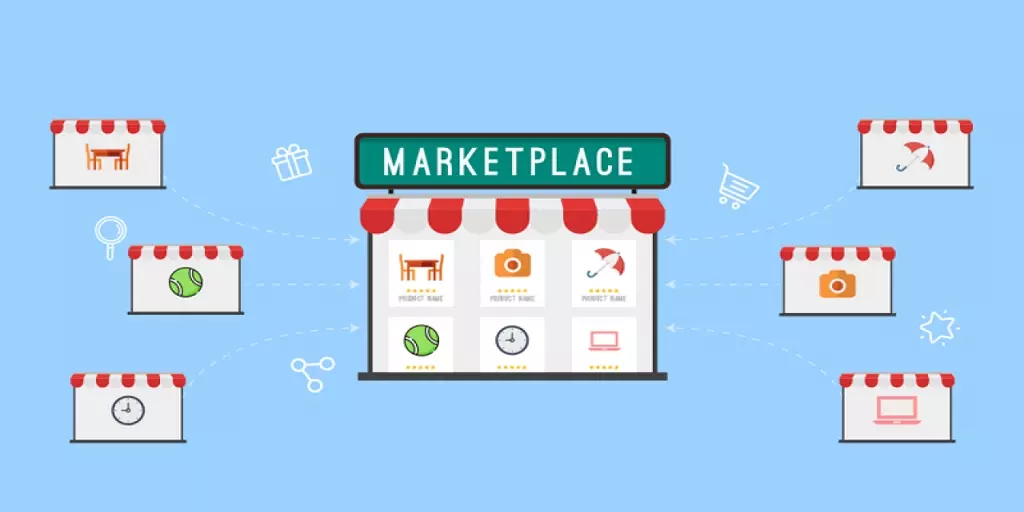
Remember, you’re not selling one aspect to one audience. You’re selling two frontiers to two audiences at the same time: your platform to sellers, and your product selection to buyers. Get the sequencing wrong, and you’ll end up with empty shelves or empty foot traffic. Get it right, and each side starts fueling the other.

Most founders default to buyer-first marketing because that’s what they know from running a single-brand store. It rarely works for a marketplace. Without a critical mass of vendors, buyer ads send traffic to thin catalogs, and those shoppers rarely come back for a second look. The smarter path starts with supply, then layers in demand once there’s something worth showing up for.

This blog breaks down a practical, two-sided approach: how to land your first wave of quality vendors, how to turn their presence into buyer traffic, and which growth tactics compound over time instead of fading after launch. Whether you’re prepping for launch or trying to reignite a stalled marketplace, the sequence below applies either way.

TL;DR

Promoting a multivendor marketplace requires a two-sided approach: sellers first, then buyers.
Attract sellers with fee waivers, built-in marketing tools, easy onboarding, and transparent commissions.
Vet vendors for quality, not just volume, since a smaller reliable roster builds more buyer trust.
Attract buyers through content marketing, vendor spotlights, paid social, retargeting, and email.
Blend a fast-payoff channel with a slower, compounding one so traffic doesn’t dry up between campaigns.
Compounding growth comes from vendor-driven referrals, loyalty programs, reviews, and niche tools.
Avoid buying traffic before you have enough vendors, and don’t treat all sellers identically.
The right marketplace technology — with vendor dashboards and commission automation — underpins every tactic above.

Understanding the Basics of Marketing Your Multivendor Marketplace Online

Every multivendor marketplace faces a version of the chicken-and-egg problem. Buyers won’t stick around if there’s nothing worth buying. Sellers won’t join a platform with no shoppers. The way out is to treat vendor recruitment as your real starting point, not an afterthought bolted onto customer marketing.

CS-Cart’s research into marketplace promotion makes a similar case: successful platforms treat vendors as growth partners, not just inventory sources, and give them the tools and data to market their own products effectively. That mindset shift changes everything about how you plan your launch.

This matters because vendors aren’t passive suppliers. Many bring an existing customer base, social following, or local reputation that a brand-new marketplace simply doesn’t have yet. When you recruit vendors well, you’re not just filling categories. You’re importing pre-built audiences that would otherwise cost thousands in paid acquisition.

Once you have a credible core of vendors, the buyer-side playbook looks a lot more like traditional e-commerce marketing, just with more moving parts. You’re coordinating vendor promotions, marketplace-wide campaigns, and individual product visibility all at once. The sections below walk through both halves in order, starting with the side that unlocks everything else.

How to Promote a Multivendor Marketplace - Vendor recruitment marketplace foundation

How to Attract Sellers to Your Marketplace

Your first vendors are doing you a favor. They’re taking a risk on an unproven platform, so your pitch needs to make that risk feel small and the upside feel obvious. Every objection a vendor raises usually traces back to one of three worries: will this cost too much, will this take too much time, or will this actually bring sales.

Start with these seller-facing moves:

•  Waive fees for early adopters. Offering free or discounted commission for your first cohort removes the biggest objection: “Will this even make me money?”

•  Give vendors real marketing tools. Built-in coupon codes, discount campaigns, and ad slots let sellers drive their own traffic instead of waiting on you.

•  Make onboarding painless. Clear documentation and bulk catalog import from platforms like Shopify or WooCommerce can turn a two-week signup into a same-day one.

•  Be transparent about commission structure. Knowband’s research on seller acquisition found that unclear payment terms are one of the fastest ways to lose a prospective vendor’s trust.

•  Share performance data regularly. Vendors who can see their own traffic, conversion, and sales trends make smarter decisions and stay longer.

•  Recruit in person, not just online. Trade shows, wholesale markets, and direct outreach still convert vendors that digital ads never reach.

•  Vet for quality, not just volume. A smaller group of reliable, well-reviewed sellers builds more buyer trust than a large roster of inconsistent ones.

Different incentive types work better at different stages of your marketplace’s life. Here’s how they typically stack up:

Incentive TypeBest ForTrade-Off
Fee waivers/subsidiesPre-launch and first 90 daysDelays commission revenue
Built-in marketing toolsOngoing vendor retentionRequires dev investment upfront
Featured placementMid-growth, competitive categoriesCan favor larger sellers over new ones
Referral bonusesScaling vendor count fastCosts stack up if not capped

Timing matters as much as the incentive itself. Fee waivers work best when you’re still building your initial vendor base, while featured placement and referral bonuses make more sense once you already have buyer traffic to offer as leverage. Sequencing incentives this way keeps your margins healthier as the marketplace scales.

If you’re still mapping out the fundamentals of vendor recruitment, our guide on launching your own multivendor marketplace walks through the full setup process step by step.

How to Attract Buyers Once You Have Vendors

With products live, the job shifts to driving qualified traffic and turning first-time visitors into repeat shoppers. This is where most of your paid and organic marketing budget should go, and where the return on your earlier vendor recruitment work starts to show up.

Businesses can leverage AI-powered sales funnel creation to streamline customer journeys and improve the effectiveness of their sales strategies. By identifying friction points and delivering personalized experiences at every stage of the buying process, AI helps marketplaces convert more visitors into paying customers while maximizing the impact of their marketing efforts.

A few channels consistently perform well for new marketplaces:

•  Content marketing. Buying guides, comparison articles, and trend roundups optimized for search bring in organic traffic that compounds over time.

•  Vendor spotlight campaigns. Featuring top sellers on Instagram and Pinterest builds authentic social proof that paid ads can’t replicate.

•  Google Shopping and social ads. Product-level ads combined with cart-abandonment retargeting recover shoppers who almost converted.

•  Email marketing. RST Software’s analysis of marketplace growth challenges points out that retention campaigns often outperform pure acquisition spend once you have an active buyer base.

•  SEO-optimized category pages. Clean, keyword-rich category structures help both search engines and shoppers find the right products fast.

•  Local and regional targeting. Even a US-first marketplace can benefit from geo-targeted campaigns that match vendor inventory to nearby demand.

Here’s a quick comparison of buyer acquisition channels by cost and payoff timeline:

ChannelCost to StartTypical Payoff Timeline
SEO content marketingLow-to-moderate3–6 months
Social ads + retargetingModerate-to-highImmediate, but ongoing spend
Email/loyalty campaignsLow1–3 months, compounds with list size
Influencer/vendor spotlightsLow-to-moderate1–2 months

No single channel carries a new marketplace on its own. The strongest launches typically blend a fast-payoff channel, like paid social, with a slower-but-compounding one, like SEO content, so early traffic doesn’t dry up once ad spend pauses.

A marketplace’s revenue engine and its buyer acquisition strategy are closely linked. Choosing the right commission structure for your vendors affects how much margin you have to reinvest in buyer-side marketing, so it’s worth revisiting both together rather than in isolation.

Data-Driven Marketing: Modern data-driven marketing can provide personalised marketing content, leverage data to gain new customers across different channels, and allow brands to change their marketing strategies at any time. Approaches like digital performance marketing help turn these insights into scalable, results-driven campaigns.
How to Promote a Multivendor Marketplace - marketplace growth 2-sided strategy

Platform Growth Tactics That Compound

Beyond initial seller and buyer acquisition, a handful of tactics keep paying off long after launch. These work because they turn your existing users into your marketing engine instead of relying on constant new spend.

•  Equip vendors to bring their own audience. Customizable banners, social templates, and referral codes let sellers pull their existing customers onto your platform.

•  Run platform-wide loyalty programs. Points, tiered rewards, or seasonal contests run in partnership with vendors increase repeat purchase rates.

•  Build free, niche-relevant tools. A sizing calculator, a style lookbook, or a savings estimator tied to your category can drive steady organic traffic.

•  Lean on reviews and ratings. McFadyen Digital’s marketplace research notes that a small share of top-performing sellers often drives a disproportionate share of revenue, and reviews are a major reason why.

•  Localize where it makes sense. Even with a US-first audience, regional pricing, language, and shipping options can unlock adjacent growth.

•  Automate vendor payouts and reporting. Sellers who trust your payment process are far more likely to promote your marketplace to their own network.

These tactics matter more once you’ve moved past the “any vendor, any buyer” phase and into building a marketplace people actively choose over competitors. That’s also where the platform-level benefits of a well-run multivendor marketplace start to show up in retention numbers, not just signups. Growth at this stage is less about new campaigns and more about making the existing experience worth returning to.

Choosing Marketplace Technology That Supports Growth

None of these tactics work if your underlying platform can’t support them. Vendor dashboards, commission automation, promotional tools, and mobile-friendly storefronts all need to exist before you can lean on the growth tactics above. A marketing plan is only as good as the infrastructure behind it.

This is where a lot of new marketplace owners hit friction. Building every feature from scratch takes months and a sizable dev budget, while a pre-built solution gets vendor tools, payment splits, and buyer-facing storefronts working from day one. That time difference often determines whether you catch a seasonal launch window or miss it entirely.

Look for a platform that handles vendor onboarding, automated commissions, multi-payment support, and mobile responsiveness out of the box. Anything less means your team spends launch season fixing infrastructure instead of running the promotion strategy outlined above.

If you’re evaluating options, Appscrip’s multivendor ecommerce marketplace solution comes with vendor dashboards, automated commission handling, and marketing-ready storefronts built in, so your promotion strategy has a platform that can actually keep up with it.

How to Promote a Multivendor Marketplace - Buyer acquisition growth channels

Common Promotion Mistakes to Avoid

Even a solid strategy can stall out if you fall into a few common traps. Watch for these as you build your promotion plan:

•  Spending on buyer ads before you have enough vendors. Traffic with nothing to buy just burns budget and hurts first-impression trust.

•  Ignoring vendor education. Sellers who don’t understand your tools won’t use them, no matter how good those tools are.

•  Treating all vendors the same. Top-performing sellers often need different incentives than new ones.

•  Underinvesting in reviews. A marketplace with thin review coverage struggles to convert, even with strong traffic.

•  Skipping mobile optimization. A large share of marketplace traffic comes from mobile, and a clunky mobile experience quietly kills conversion.

•  Overcomplicating the commission structure. Vendors who can’t easily calculate their own payout tend to disengage or leave.

Most of these mistakes share a root cause: promoting the marketplace before the underlying operations — whether that’s vendor readiness, review systems, or mobile experience — are actually solid enough to support the traffic you’re chasing. Fixing the foundation first almost always beats fixing it after a costly ad push.

Ready to Grow Your Marketplace?

Learning how to promote a multivendor marketplace comes down to sequencing: recruit quality vendors first, turn their presence into buyer traffic, then layer in loyalty and referral tactics that compound. None of it works without a platform built to support vendor tools, commission automation, and buyer-facing marketing from day one. 

That’s exactly what Appscrip’s multivendor marketplace solution is built for, so your promotion strategy has room to grow instead of hitting a technical ceiling.

promote a multivendor marketplace
TL;DR – Cleaning Company Business Plan

Frequently Asked Questions (FAQs)

How do I promote a multivendor marketplace with no vendors yet? +

Focus entirely on seller acquisition first. Offer fee waivers, in-person outreach, and easy onboarding before spending on buyer-facing ads.

What’s the fastest way to attract buyers to a multivendor marketplace? +

Vendor spotlight campaigns and retargeting ads tend to convert fastest, especially when paired with early reviews and social proof.

How much should I invest in seller acquisition versus buyer acquisition? +

Early on, weight spend toward sellers. Once you have 20–30 active, quality vendors, shift more budget toward buyer marketing.

Do multivendor marketplaces need different marketing than regular e-commerce stores? +

Yes. You’re marketing to two distinct audiences with different motivations, so your messaging, channels, and incentives need to reflect that.

What role does technology play in promoting a multivendor marketplace? +

A platform with vendor dashboards, commission automation, and marketing tools makes every promotion tactic easier to execute and track.

Picture of Arjun

Arjun

With a focus on helping founders navigate the complexities of digital transformation, Arjun translates sophisticated B2B tech concepts, from Gen-AI agents to modular super apps into simple actionable guides. At Appscrip, Arjun leverages his understanding of logistics, healthcare platforms, and marketplace economies to help corporate decision-makers accelerate their GTM without compromises. When he isn't deconstructing the latest in AI automation, he is likely analyzing the next big shift in the "10-minute economy."

Table of Contents

Subscribe to our newsletter

Get the latest news and updates delivered to your inbox.

Scroll to Top

Leaving Already?

Tell us what you need and our team will get in touch with you soon!
Free consultation
WhatsApp